Sunday, 12 May 2013

Barbara De Angelis "Secrets About Life Every Woman Should Know: Ten Principles for Total Emotional and Spiritual Fulfillment "

If you find Kastaneda too dramatic and you think the methods he offers are not applicable to your busy life, you may try Barbara de Angelis "Secrets About Life Every Woman Should Know". 

It is Kastaneda or Hawaiian shamans packed and explained to modern women who do not want to be bothered with extravagances such as Daoism, I mean those many women who have usual life problems like a broken heart, children, job etc.

The book is a bit long - Barbara belongs to a "chewing" type. Maybe being long and sentimental is something typical for an American. I can't judge, but I have this impression. Elizabeth Gilbert is also a "chewing" type. Sometimes I think American editors ask their authors to bring bricks with no less than 500 000 words, so the authors have to chew. Why shorter novels are not in fashion? Why not to announce, just like in Vogue - "This year is the year of short stories, mini is back again"! Have you noticed how heavy children books became?

Back to Barbara. In fact, being a "chewing" type is being analytical. I, unfortunately, also belong to this type. Instead of writing something creative like "Brigitte Jones" and make people smile, a "chewing" type would rather chew and provide people with an "understanding".

Did you know that love can be explained? Barbara gives one of THE BEST explanations of love, no sarcasm here. In fact if you have no money and time to fly to India's ashrams or you do not want to pay psychologist's fees, the cheapest and, in my opinion, the best solution, is Barbara's book. She walks you through her life, she is very sincere and very helpful.


Wednesday, 1 May 2013

Diana Vreeland "DV"

Many books about fashion history are boring.
They are dead statements of facts like old encyclopedias.  Do not you think so?

To learn about 20th century's fashion history in the least boring way is to read Diana Vreeland's autobiography. 

What an inspiring life!

It is an autobiography above all. However her life was connected so closely to style and beauty that you also learn a lot about fashion and style. She starts with Diyagilev, she speaks a little bit about Queen Mary and the royal family, few paragraphs about Coco Chanel, few pages on Japan, one chapter about colors and a lot about France and US. She met a lot of interesting people and she makes you look at them from a different angle. 

She shares her passion for beauty and teaches  you not to be afraid of being different.

Here are few quotes from the book.

"Conde Nast was a very extraordinary man, of such a standard. He had a vision. He decided to raise the commercial standards of the American woman. Why, he decided, shouldn't they have the best-looking clothes? He gave them Vogue. The best looking houses? House & Garden. And don't forget Vanity Fair! Why, Conde decided shouldn't American women know about writers, entertainers, painters - that Picasso was painting extraordinary paintings, that a man named Proust was writing an extraordinary book? Why shouldn't they know... about Josephine Baker?"

 or

"Most people haven't got a point of view; they need to have it given to them - and what's more, they expect it from you. I had this most curious thing happen - it must have been about 1966 or'67. I published this big fashion slogan: THIS IS THE YEAR OF DO-IT-YOURSELF.

Wednesday, 17 April 2013

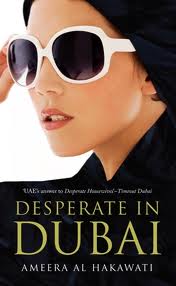
Ameera Al Hakawati "Desperate in Dubai"


I have already talked about women in Turkey of 16th century (harem), French queen and Russian empressof 18th century, Chinese women of 19th century, Mexican women at the turn of 20th century and many others. Today is Dubai of the 21st century.


My friend, who has been working in Dubai for several years, wanted to write a post about living and working in Dubai. She kept saying: "Dubai is a vicious city, the world of double standards." After some time, she advised the book "Desperate in Dubai" by Ameera Al Hakawati saying that the book conveys the mood. 


I have been several times in the city, unreal, like a mirage in deserts, where the smell of money is felt like anywhere else, and some of my unspoken assumptions were found in the book. This story  will open slightly  abayas'  veil.


The main characters of the book are four women: The Lady Luxe, the daughter of a powerful man (it was her line in the novel that captured me the most - Lady Luxe is rebellious, playing with death and leading a double play), Leila, a girl from Lebanon, lonely and desperate for a rich husband, Nadia, a devoted wife, who left her work in London for the sake of her husband's career in Dubai and an Indian girl from the UK, who had come to work in Dubai to forget her past.


It is the same old story of women's search for happiness, with one exception - the play takes place in the United Arab Emirates. Brands of clothing, cosmetics, and cars are constantly mentioned. It is overwhelming, but it is also an integral part of life in Dubai. In my opinion the book presents well the atmosphere of Dubai.

If you are curious to know what kind of a mystery "shadows of a man" hide, read the book.

Wednesday, 10 April 2013

"Snow Flower and the Secret fan" Lisa See

This story concerns the events that took place in 19th century in China, during that time when daughters were considered "worthless branches on the family tree. They drained the family resources, they were raised by one family for another". Perhaps in some places of the world  it is still the case.

Lily is one of the worthless branches from a poor family. When she turns six her family invites a diviner to fix the date for Lily's foot binding. The diviner studies Lily's horoscope and discovers that she is not an ordinary girl. The diviner confers with a matchmaker, they both examine the girl and announce that Lily has a great potential of making a woman "carrier", i.e. marrying a man from the wealthiest family in their county, provided Lily's feet are bound properly, of course.

The matchmaker proposes that Lily has also a laotong.

"I believe your daughter might also be eligible for a laotong relationship" 

I knew the words and what they meant. A laotong relationship was completely different from a sworn sisterhood. It involved two girls from different villages and lasted their entire lives, while a sworn sisterhood was made up of several girls and dissolved at marriage."

When Lily turns seven she goes through the foot binding process and when the agonizing part of it is finished, the matchmaker comes and announces she found a loatong for Lily whose name  is Snow Flower.

"Lily and Snow Flower are of identical height, of equal beauty, and most important, their feet were bound on the same day. Snow Flower's great-grandfather was a jinshi scholar, so social and economic standings are not matched"

The matchmaker says that regardless of the difference between two families, Snow Flower's parents did not oppose to laotong relationship between the girls. The relationship will be beneficial for Lily, who was ideal in many ways but needed a refinement to enter a higher household. The matchmaker gives a fan to Lily where it is written in Nu Shu (secret women's writing):

"I understand there is a girl of good character and women's learning in your home. You and I are of the same year and the same day. Could we not be sames together?" 

From that day Lily and Snow Flower's laotong relationship started and lasted all their lives. What happen to the girls afterwards? Find it for yourselves.